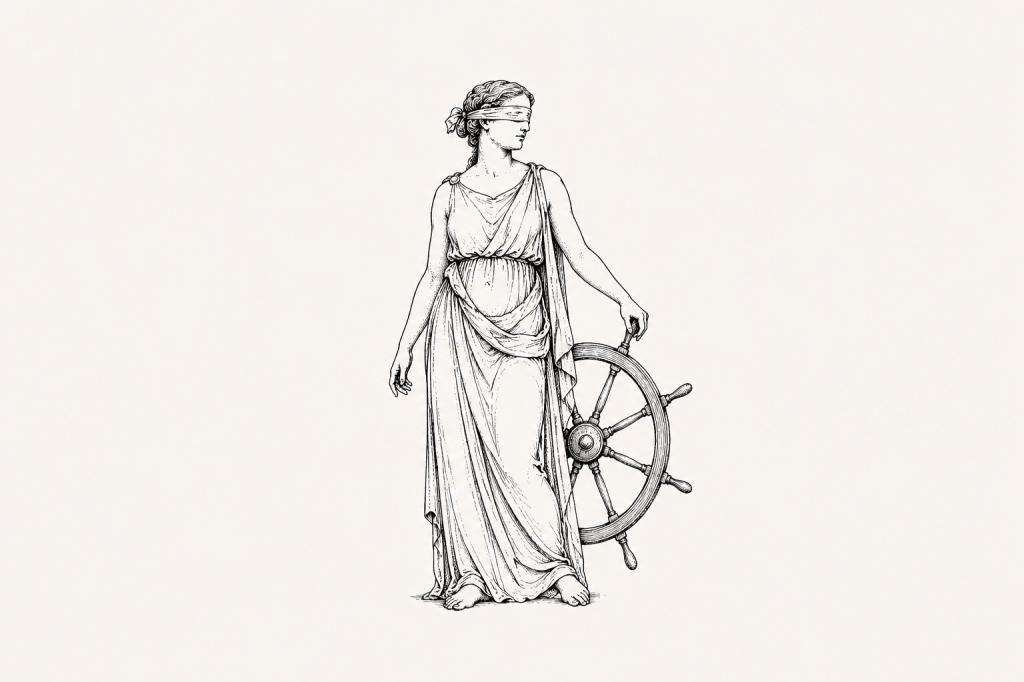
“Merit alone is not enough!” Those are words I have heard quite often over the last few years from very different people and in very different cultural contexts. But what fascinates me is that I cannot remember having heard them before completing my PhD. In fact, as far as I can remember, it was my supervisor who first spoke those words while I was sitting in her office—somewhat broken by a severe burnout.
To be honest, I felt dumbfounded. I felt dumbfounded for two different reasons. The first was that I was, of course, absolutely certain that I knew what she meant and that this was, in fact, one of the major reasons for the rather miserable condition I was in.
More importantly, however, I was dumbfounded because this was actually the first time that the topic had been put on the table.
During the years leading up to that moment, I had worked obsessively on my PhD. This project, this thesis, this future book, was the first thing I thought about when I woke up in the morning and the last thing I thought about before going to sleep, while spending far too many hours at my desk in between.
To be fair, I loved the topic I was working on, and I sincerely believed that I was working on something important—at least as important as anything can be in the field of Classical Studies. So I do not want to evoke the image of someone merely slaving away. That was definitely not the case.
But there was another side to it. Throughout my years in higher education, money was always a source of concern. As a First-Generation Academic, I never had the feeling that failure was truly an option. My PhD scholarship lasted exactly three years. During those three years, I had to produce something on which I could build a career. At least, that was how the situation presented itself in my mind.
And I succeeded—or let’s say, I succeeded in doing my part. I even finished the thesis a few months early, allowing my disputation to take place within the funded period of my scholarship.
I received the grade summa cum laude, the highest possible distinction. But more importantly—and I am still genuinely proud of this—my external reviewer did not merely suggest that the dissertation be published in a well-respected series on whose editorial board he served. He even stated that virtually no revisions were necessary, which is, to put it mildly, unusual.
In short, I had managed to produce a monograph of more than 400 pages in about three years, the quality of which was judged so highly that it was essentially taken out of my hands and sent straight into publication. Surely, that was an achievement on which one could build a solid academic career.
Wasn’t it?
Well, not quite.
This is the point at which we return to the moment when I was sitting in my supervisor’s office, exhausted, depressed, and anxious. It was during COVID, and we were seeing each other in person for the first time in many months. By then, several months had already passed since my successful disputation—months I had spent unsuccessfully applying for positions, scholarships, and grants.
“Merit alone is not enough,” was how she explained my situation. But—and this may be even more telling—she never said what exactly it was that was missing.
As I have already suggested, I, on the other hand, was absolutely sure that I knew what she meant. What was missing was a network. A strong place within the academic community. People with established names in the field who wanted to see me rise through the ranks!
I had none of those things. I was a First-Generation Academic, after all, who had written and completed most of his PhD during COVID at a fairly ordinary German university. Where, exactly, was I supposed to have acquired them? My work, the distinctions, the merit—that was all I had.
Today, I see things differently. Over the last few years, I have spoken to too many people and heard too many stories to still hold on to such a naïve view. Because, as always, reality does not lend itself to simple explanations like that.
Reality is messy.
Yes, of course, such people exist. People whose positions—and, in effect, entire careers—seem to be laid out for them. But even in those cases, I would argue that it is far less a matter of a corrupt system than the situation may appear to the—we have to be honest here—jealous eyes of those who are less fortunate. In my opinion, it is more often a mixture of being in the right place at the right time and possessing that tiny, almost unexplainable social edge that makes other people want to have them around.
But then there are, of course, those other people—those about whom one hears much less, even though I have met them almost as often. I am speaking of people who seem to have everything going for them. People who studied at great universities, worked with great supervisors, and are well connected within the academic community—and who nonetheless struggle.
In other words, the answer to the question implied by the statement “Merit alone is not enough” is far more complicated—and far more uncomfortable—than one might think while struggling as I was on that day in my supervisor’s office. Because if one wants to answer that question with a single word, one ultimately arrives at the word “luck.” And, as you will know, Fortuna is blind.
But for me personally, this is not the hard part. Because many of the most important things in life come down to sheer luck. Where are you born? Who are your parents? Do you meet the right partner? Do you stay healthy? These—and many other things—are ultimately decided by blind Fortuna.
The hard part for me is that academia is very good at pretending to be otherwise.
Most of the time, academia presents itself as though every appointment, every publication, every prize, and every distinction were based solely on merit—even though everyone knows that this is not actually the case.
But then, does everyone know?
To be honest, for a very long time, I did not.
But in my personal opinion, the reason that I did not know was not that I was being naïve or even stupid. I was simply facing a challenge that affects many First-Generation Academics—or, rather, one that seems to affect us much more frequently and deeply than those who come from academic backgrounds.
Many of us enter academia with only a very superficial understanding of its structures. Because of this, we often arrive strongly believing in the idealised image academia presents to the outside world. And it takes years to become familiar enough with the system to discover the truth behind these Potemkin villages. Years that can be filled with anxiety, disappointment, and yes even burnout…
So, what is it that I would say to my beaten and battered younger self?
That everything will turn out fine in the end? Certainly not.
That he simply needs to believe in himself and soldier on? Still not quite.
Nowadays, I think, I would put it in rather Stoic terms. I would tell him to accept the things he cannot change, while still doing his best and never stop working towards his goals.
Because in the end, Fortuna may be blind.
But Fortuna also favours the bold.
 Jens Fischer
Leave a Note